
“Boost Travel Agency Sales through Data-Driven Marketing”
In the dynamic travel industry, maintaining a competitive edge is essential. Implementing a data-driven digital marketing strategy for travel agencies can significantly enhance your business’s success. This guide explores three pivotal approaches: effective travel blogging, influencer partnerships for hotel marketing, and robust SEO practices for tourism websites. Additionally, we’ll discuss how Marketing Aency Like as – Xtreme Ads can elevate your marketing efforts, driving increased sales and growth in the travel sector.
Best Digital Marketing Strategy for Indian Travel Agency in 2025
1. Google Ads for Travel Agencies : Faster Bookings, More Leads

In India, the travel industry is more competitive than ever. From honeymooners searching for “Maldives tour package from Delhi” to families looking for “affordable Shimla-Manali trip”, travelers are turning to Google before booking. This is exactly where Google Ads for travel agencies in India comes in — helping your agency appear at the top when it matters most.
Unlike traditional marketing or even SEO (which takes months), Google Ads gives you instant visibility, ensuring that your travel packages are discovered by the right audience at the right time.
Why Indian Travel Agencies Should Use Google Ads
- Show Up Above Big Brands – Compete with OTAs like MakeMyTrip or Yatra by targeting niche, high-intent searches such as “Kerala houseboat honeymoon package” or “Delhi to Leh Ladakh bike trip.”
- Target Local & International Travelers – Whether you serve Indian tourists or inbound international travelers, ads can be shown in specific cities, states, or even foreign markets like UAE, UK, and USA.
- Work Within Your Budget – Even smaller Indian agencies can run effective campaigns by starting with limited budgets and scaling only when results come in.
- Promote Seasonal Packages – Quickly launch ads for summer holidays, festive getaways, or last-minute New Year trips, and instantly grab attention.
- Inspire & Reconnect – Use Display Ads to showcase beautiful destinations, and Remarketing Ads to bring back users who searched but didn’t book.
Best Practices for Indian Travel Agencies Running Google Ads
- Focus on Local Keywords – Example: “Goa honeymoon packages from Mumbai” or “Delhi to Kashmir tour price.” These terms attract travelers ready to book.
- Use Regional Targeting – Promote services in high-demand areas like Delhi NCR, Bangalore, Mumbai, or Tier-2 cities where more families are exploring vacations.
- Optimize Landing Pages – Instead of sending users to your homepage, create destination-specific booking pages (e.g., “Shimla Tour Package – 3 Nights 4 Days”).
- Leverage Remarketing – Many Indian travelers compare 3–4 sites before booking. With remarketing ads, your agency stays on top of their mind.
- Highlight Offers & EMI Options – Ads with “special discounts,” “limited-time deals,” or “easy EMI travel plans” appeal strongly to Indian customers.
- Test & Track – Use A/B testing for ad headlines like “Book Kashmir Tour at ₹12,999” vs “Best Kashmir Package for Couples” to see what works better.
Quick Facts: Why Google Ads Work Best for Indian Travel Agencies
- India has 700M+ internet users, and a growing share searches travel packages directly on Google.
- During festive seasons and long weekends, travel-related Google searches spike by 2–3x.
- Agencies using Google Ads in India often generate more qualified leads and faster bookings compared to relying on organic traffic alone.
For Indian travel agencies, Google Ads isn’t just marketing—it’s a booking engine. Whether you’re selling honeymoon trips, group tours, religious yatras, or international vacations, ads put you directly in front of travelers who are ready to book now.
CASE STUDY: 260% Increase in Leads for Tour Packages with Google Ads
2: Travel Indusry Blogging Best Practices
In the ever-expanding digital landscape, travel blogging has evolved from a mere pastime to a potent force in the realm of marketing, wielding the ability to captivate potential customers and foster a dedicated community of followers. This transformative medium transcends conventional advertising by offering a unique and personal connection with audiences, making it an indispensable tool for businesses within the travel industry.
Here are key best practices to elevate your travel blogging game:
Compelling Storytelling: Craft engaging and relatable stories that captivate your audience, making them feel connected to the travel experience.
Compelling storytelling is the heart of a successful travel blog. To achieve this, focus on creating narratives that resonate with your audience. Share personal anecdotes, emotions, and unique perspectives about your travel experiences. Transport your readers to the destinations by describing the sights, sounds, and sensations you encountered. Make your stories relatable by incorporating universal themes and emotions. Building a connection with your audience through storytelling fosters a sense of shared experiences, making them more likely to return to your blog for future adventures.
Stunning Visuals: Utilize high-quality, visually appealing images and videos to showcase destinations, accommodations, and experiences, enhancing the overall appeal of your travel blog.
Visuals play a crucial role in the success of a travel blog. Invest in high-quality photography and videography to capture the beauty and essence of your travel destinations. Use vibrant and captivating images that showcase landscapes, local cuisine, cultural events, and personal experiences. Visual content not only enhances the aesthetics of your blog but also provides a more immersive experience for your audience. Ensure that your visuals are well-curated, relevant to your stories, and optimized for web display to maintain a visually appealing and professional appearance.
SEO Optimization: Incorporate relevant keywords and phrases to boost your blog’s visibility on search engines, driving organic traffic to your content.
Search Engine Optimization (SEO) is crucial for increasing the discoverability of your travel blog. Identify relevant keywords and phrases related to your travel destinations, experiences, and niche. Strategically incorporate these keywords in your blog titles, headers, meta descriptions, and throughout your content. Use tools like Google Keyword Planner to research popular search terms. Effective SEO practices improve your blog’s ranking on search engine results pages, increasing the likelihood of attracting organic traffic. Regularly update and optimize your content to stay relevant and maintain a strong online presence.
User-Friendly Design: Ensure your blog is easy to navigate, mobile-friendly, and provides a seamless user experience to keep visitors engaged.
A user-friendly design is essential for keeping visitors on your travel blog and encouraging them to explore further. Opt for a clean and organized layout that is easy to navigate. Utilize intuitive menus and clear categories to help users find specific content effortlessly. Prioritize a mobile-friendly design to accommodate users accessing your blog on various devices. Ensure quick loading times by optimizing images and implementing efficient coding. Consider user feedback to make continuous improvements to your blog’s design, creating a positive and enjoyable experience for your audience. A user-friendly blog design contributes to higher engagement and encourages repeat visits.
3: Influencer Marketing for Hotels
Influencer marketing has emerged as a dynamic and influential tool, providing hotels with the means to extend their reach, captivate a broader audience, and cultivate a sense of credibility. This transformative approach goes beyond traditional advertising, leveraging the personal influence of individuals to create authentic narratives that resonate with potential guests.
Here’s how you can leverage it effectively:
Identify Relevant Influencers: Partner with influencers whose audience aligns with your target market to maximize the impact of your marketing efforts.
Identifying relevant influencers is a critical step in influencer marketing for your hotel. Begin by clearly defining your target audience and understanding their preferences. Research influencers in the travel and hospitality niche whose followers align with your ideal guests. Consider factors such as location, interests, and demographics. Utilize social media platforms and influencer marketing tools to find influencers with a strong and engaged following. Establish partnerships with influencers who can authentically promote your hotel to an audience that is likely to be interested in your offerings.
Authentic Collaborations: Encourage influencers to create authentic and genuine content that showcases the unique features and experiences your hotel offers.
Authenticity is key in influencer marketing. Collaborate with influencers who genuinely appreciate your hotel and its offerings. Provide influencers with the creative freedom to showcase their real experiences, ensuring that the content aligns with their personal brand. Authenticity builds trust with the influencer’s audience, making the promotional content more relatable and impactful. Encourage influencers to highlight specific aspects of your hotel, such as amenities, services, or unique experiences, in a way that feels natural and sincere to their followers.
Leverage User-Generated Content: Encourage guests to share their experiences on social media, transforming them into brand advocates and influencers in their own right.
Harness the power of user-generated content (UGC) by encouraging your guests to share their experiences on social media. Implement branded hashtags and encourage guests to use them when posting about their stay. Feature UGC on your hotel’s social media accounts, website, and marketing materials to showcase the authentic experiences of real guests. This not only enhances the credibility of your hotel but also turns satisfied guests into brand advocates. Consider running contests or promotions to incentivize guests to share their content, expanding your reach and creating a community of loyal brand supporters.
Measure and Analyze: Use data analytics to measure the success of influencer campaigns, assessing reach, engagement, and conversions to optimize future collaborations.
After implementing influencer campaigns, leverage data analytics to measure their success and impact. Track key metrics such as reach, engagement, and conversions attributed to influencer-driven content. Utilize tracking tools and analytics platforms to gain insights into the performance of each campaign. Assess which influencers generated the most positive outcomes for your hotel, and analyze audience demographics and behavior. Use these findings to refine your influencer marketing strategy, optimizing future collaborations for maximum effectiveness. Regularly monitor and adapt your approach based on the evolving landscape of influencer marketing and the changing preferences of your target audience.
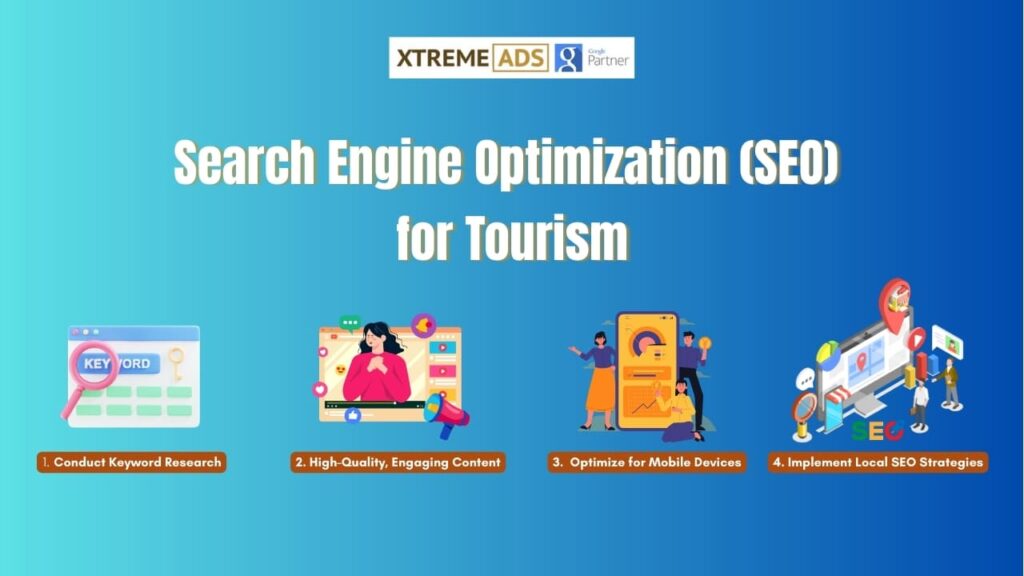
4: Search Engine Optimization (SEO) for Tourism Websites
In today’s digital landscape, establishing a robust online presence is essential for tourism businesses aiming to attract and engage potential travelers. A well-optimized website serves as the cornerstone of this presence, facilitating exploration, discovery, and informed decision-making.
To enhance your tourism website’s SEO, consider the following strategies:
1. Conduct Comprehensive Keyword Research
Understanding the search behavior of your target audience is fundamental. Utilize tools like Google Keyword Planner or SEMrush to identify high-volume, relevant keywords that potential travelers use. Integrate these keywords naturally into your website’s content, meta tags, and headers to improve search engine rankings. Regularly update your keyword strategy to align with evolving travel trends and user interests.
2. Develop High-Quality, Engaging Content
Creating informative and captivating content is vital for attracting and retaining visitors. Produce articles, blog posts, and destination guides that address the specific needs and queries of your audience. Incorporate relevant keywords seamlessly to enhance search visibility. Utilize a mix of text, images, and multimedia elements to enrich user experience and encourage longer site visits. Consistently update your content to reflect current trends and provide fresh perspectives.
3. Optimize for Mobile Devices
With the increasing reliance on smartphones and tablets for travel planning, ensuring your website is mobile-friendly is imperative. Implement a responsive design that adapts to various screen sizes, providing an optimal viewing experience. Streamline navigation for ease of use on smaller devices and optimize images and media to reduce loading times. Google prioritizes mobile-optimized sites in search rankings, making this a critical aspect of your SEO strategy.
4. Implement Local SEO Strategies
Capturing the attention of travelers seeking local experiences requires effective local SEO practices. Create and optimize your Google Business Profile, ensuring all information is accurate and up-to-date. Encourage satisfied customers to leave positive reviews, enhancing your credibility and visibility. Incorporate location-specific keywords into your content and meta descriptions to improve local search performance. Engaging with local communities and highlighting regional attractions can further boost your local SEO efforts.
In the competitive realm of digital marketing, partnering with innovative solutions like Xtreme Ads can significantly amplify your efforts. By leveraging advanced technologies and data-driven strategies, Xtreme Ads ensures your marketing messages reach the right audience with precision and impact. This collaboration can transform your digital marketing approach, driving increased engagement and sales in the travel industry.
By implementing these strategies, your tourism website can achieve improved visibility, attract a broader audience, and convert visitors into loyal customers.
Xtremeads – Affordable seo packages For Travel Agency Or Industry
Key Data About the Travel Industry & Digital Marketing Opportunities:
| Category | Description | Key Data Points |
|---|---|---|
| Travel Industry Outlook | Global Spending | Expected to increase by 9% globally in 2025. Indian travelers lead with a 14% increase. |
| International Tourist Arrivals | Projected growth of 3% to 5% in 2025. | |
| Market Revenue | Estimated to reach $955.94 billion by 2025, growing annually at 3.91% until 2029. | |
| Digital Marketing Opportunities | SEO & Content Marketing | Optimizing websites and creating engaging content to attract bookings. |
| Social Media & UX | Enhancing user experience through mobile-friendly sites and leveraging social media for visibility. | |
| AI & Personalization | Implementing AI for personalized travel recommendations to enhance customer satisfaction. | |
| Local SEO | Targeting specific regions through local search optimization. | |
| Key Trends in Digital Marketing for Travel | Sustainable Travel | Highlighting eco-friendly options to attract environmentally conscious travelers. |
| Influencer Marketing | Partnering with influencers to increase brand visibility and credibility. | |
| Data Analytics | Using analytics to understand traveler behavior and inform targeted strategies. |
How XtremeAds Helps Travel Agencies Boost Sales
Travel is all about timing and relevance—and that’s exactly where XtremeAds delivers. By using advanced targeting, we reach travelers based on demographics, interests, and intent, ensuring your packages are shown to the right audience at the right moment.
Real-time insights let you optimize campaigns instantly, so every rupee spent drives maximum ROI. With tailored messaging and A/B-tested campaigns, travel agencies can increase direct bookings, generate more qualified leads, and scale faster.
In fact, one of our campaigns delivered a 260% increase in leads for tour packages using precision-driven Google Ads strategies.
With XtremeAds, it’s not just about visibility—it’s about filling seats, increasing bookings, and fueling growth for your travel business.
1. How can a travel agency use social media to attract more customers?
Leverage platforms like Instagram and TikTok to share visually stunning travel content, such as destination highlights, user-generated content, and behind-the-scenes travel tips. Use targeted ads with compelling visuals and CTAs like “Book Now” to drive traffic to your website. Engage followers with polls, stories, and travel quizzes to boost interaction.
2. What type of content should a travel agency focus on for its blog?
Create SEO-optimized blog posts on topics like “Top 10 Family-Friendly Destinations” or “Ultimate Solo Travel Itineraries.” Include practical guides, packing tips, and local insights. Use keywords like “best travel destinations 2025” to improve search rankings and drive organic traffic.
Why is it important for a travel agency to invest in paid advertising?
Paid ads on Google Ads and social platforms allow you to target users actively searching for travel-related terms or browsing vacation ideas. Use retargeting ads to re-engage website visitors who didn’t book. Allocate budget to high-ROI campaigns, like search ads for “affordable vacation packages.”
