

Paid digital advertising is a must-have tool for businesses of any size in today’s fast-moving digital world, with consumer behavior being a moving target and new platforms giving themselves birth every few days. Gone are the days when just organic reach guaranteed visibility and growth. Come 2025, a strong paid media strategy will not be a choice but a need for staying competitive and effectively communicating with the target audience.
So, the digital world is very dynamic with trends like AI coming into the picture more, short-form video content getting the limelight, and CTV advertising growing bigger in importance. These are shifts that require businesses to modify their strategies so that they can make the best use of the channels and technology. Before getting into the world of paid ads, it is important for businesses to understand how the landscape is changing, recognize exactly what they want to achieve, and pick from the options of advert types to earn them the best ROI.
What Are Paid Digital Ads?
Paid digital ads are online advertisements that businesses pay for to promote their products, services, or brand. Unlike free (organic) methods like SEO or social media posts, paid ads let you instantly reach your target audience on platforms like Google, Facebook, Instagram, YouTube, and more.
Think of it like this:
You’re opening a shop in a busy market, but instead of waiting for people to pass by, you pay to place big signboards right where your ideal customers are already looking.
These ads can appear:
- On top of Google search results when someone looks for something
- As banners or pop-ups on websites (called Display Ads)
- In between posts on social media (like Instagram or Facebook ads)
- Before or during YouTube videos (Video Ads)
- Even inside apps or games (App Ads)
You only pay when someone clicks your ad, sees it a certain number of times, or takes an action like filling out a form—depending on your ad type.
Benefits of Paid Digital Advertising
The advantages of incorporating paid digital advertising into your marketing mix are numerous and impactful:
- Quick Visibility and Targeted Reach: One of the most significant benefits is the speed at which you can gain visibility. Unlike organic efforts that can take time to yield results, paid ads can put your brand in front of thousands, or even millions, of potential customers almost instantly. Moreover, advanced targeting options allow you to reach specific demographics, interests, behaviors, and even geographic locations, ensuring your message resonates with the most relevant audience.
- Performance Tracking and Optimization: Paid digital advertising platforms have deep couponing systems that can give you insightful analytics and reports. Thus you can track any aspect of your campaigns such as impression, click, conversion, or return on ad spend (ROAS). Such a data-driven approach gives a great deal of leverage for optimization, wherein you can constantly optimize your targeting, offers, creatives, or bidding for better returns during later phases. As per Forbes, it will be imperative for companies to focus on ROAS optimization in 2025, and with platforms like Google Ads and Meta imposturing upwards, businesses cannot afford to spend inefficiently
- ROI-Driven Marketing Across the Entire Funnel: Paid ad campaigns can be executed at different stages of a customer’s journey, from brand awareness top-of-the-funnel action to conversions and sales at the bottom. Appropriately distributing your budget while selecting the best ad types available at each phase will indirectly transform every rupee investment into an ROI-driven marketing strategy.
Top 10 Paid Digital Advertising Types in 2025
As we navigate 2025, the landscape of paid digital advertising offers a diverse array of options, each with its unique strengths and ideal use cases. Understanding these will help you pinpoint the best fit for your business goals.
1. Search Ads (PPC)
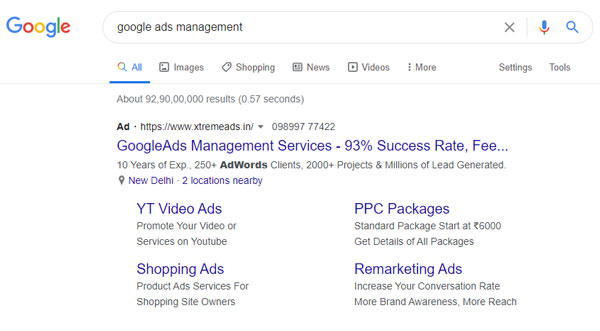
How it works: Search Ads, often referred to as Pay-Per-Click (PPC) advertising, are text-based advertisements that appear on search engine results pages (SERPs). When users search for specific keywords, your ad can show up at the top or bottom of the results, marked as an ‘Ad’. You pay a fee each time someone clicks on your ad.
Platforms: The dominant players here are Google Ads and Bing Ads. Google Ads, in particular, holds a significant market share, making it a go-to for many businesses looking to capture high-intent traffic.
Pros & Cons:
- Pros: Highly effective for capturing users with immediate intent (e.g., someone searching for “best PPC agency in Delhi”). Offers quick visibility, measurable results, and precise keyword targeting.
- Cons: Can be competitive and expensive for popular keywords. Requires continuous optimization of bids and ad copy.
Best for: Businesses looking for high-intent leads, direct responses, and immediate sales. Ideal for service-based businesses, e-commerce stores, and lead generation campaigns where users are actively searching for solutions.
2. Display Ads
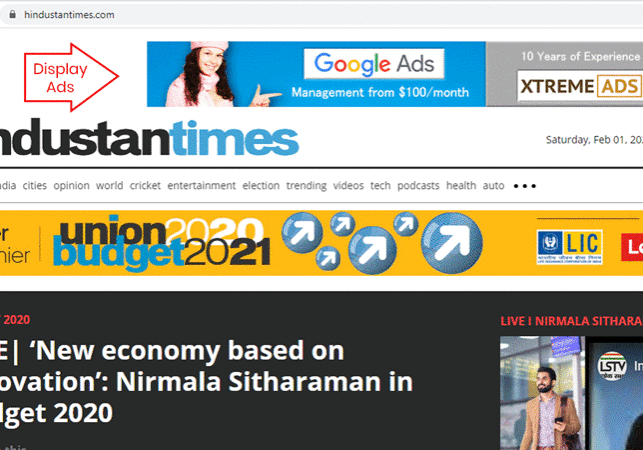
Where they appear: Display Ads are visual advertisements (images, GIFs, or short videos) that appear across a vast network of websites, apps, and platforms like YouTube. They are less about immediate intent and more about brand awareness and recall.
Key platforms: The Google Display Network (GDN) is the largest, reaching over 90% of global internet users. Other platforms like AdRoll also offer extensive display advertising capabilities.
Ideal for: Building brand recall, creating awareness for new products or services, and retargeting (showing ads to users who have previously visited your website). They are excellent for visual storytelling and keeping your brand top-of-mind.
3. Social Media Ads
Social media platforms have become powerhouses for paid advertising, offering unparalleled targeting capabilities based on user demographics, interests, and behaviors. They are particularly effective for reaching a broad yet segmented audience and fostering direct engagement.
- Facebook & Instagram Ads: These platforms, both owned by Meta, offer extensive targeting options and a wide variety of ad formats. They are excellent for reaching diverse audiences, from young adults to older demographics, and for driving brand awareness, lead generation, and e-commerce sales. As XtremeAds highlights, Meta Ads are crucial for lead capture and showcasing products directly in the feed [XtremeAds Website].
- LinkedIn Ads: Primarily a professional networking platform, LinkedIn Ads are ideal for B2B (business-to-business) marketing. You can target professionals based on their job title, industry, company size, and skills, making it highly effective for lead generation, thought leadership, and talent acquisition.
- Twitter (X) Ads: Best for real-time engagement, trending topics, and driving conversations around your brand or products.
- TikTok Ads: Dominates the short-form video content space. Ideal for reaching younger audiences with highly engaging, creative, and often viral video campaigns. Short-form video ads are a significant trend for 2025, with mobile video ad spending estimated to reach $53.9 billion [2].
- Pinterest Ads: A visual discovery engine, Pinterest Ads are perfect for businesses in fashion, home decor, food, and other visually-driven industries. Users are often in a planning or inspiration mindset, making them receptive to product and idea-focused ads.
Use cases by platform and audience type: Each platform caters to different audiences and objectives. For instance, a fashion brand might thrive on Instagram and Pinterest, while a software company would find more success on LinkedIn and Google Search Ads.
Format options: Social media ads come in various engaging formats, including Carousel Ads (showcasing multiple images/videos), Video Ads (powerful for storytelling), Stories Ads (immersive, full-screen experiences), and Lead Forms (allowing users to submit information directly within the ad).
4. Video Ads
Power of storytelling and demo: Video ads are incredibly effective for capturing attention, conveying complex messages, and demonstrating product features. They allow for a rich, immersive experience that can build emotional connections with your audience. As highlighted, video ads are getting shorter and shorter, with a focus on engaging content that can be consumed quickly, even without sound [2].
Platforms: YouTube remains the king of video advertising, offering various formats and extensive reach. Other popular platforms include Instagram Reels and TikTok, which are driving the short-form video trend. Connected TV (CTV) advertising is also emerging as a must-have for diversifying digital strategies in 2025, allowing for retargeting and brand introduction across streaming platforms [1].
Skippable vs. Non-skippable ads: Advertisers can choose between skippable (after 5 seconds) and non-skippable (up to 15-20 seconds) video ad formats, depending on their objectives and budget. Non-skippable ads guarantee viewership but can be perceived as intrusive if not well-crafted.
5. Shopping/Product Listing Ads (PLA)
- eCommerce product promotions: Essential for e-commerce businesses, Shopping Ads (also known as Product Listing Ads or PLAs) display your products directly on search engine results pages, complete with images, prices, and store names. They are highly visual and product-focused.
- Comparison shopping engines: These ads are often managed through platforms like Google Shopping, which aggregates product information from various merchants, allowing users to compare products and prices easily.
- Visual product-first ad format: PLAs are designed to drive immediate purchases by showcasing the product upfront, making them incredibly effective for online retailers.
6. Native Ads
In-feed ad experiences: Native ads are designed to blend seamlessly with the surrounding content of a webpage or platform, making them less intrusive than traditional display ads. They match the form and function of the content they appear alongside.
Platforms: Popular native advertising platforms include Taboola and Outbrain, which distribute content recommendations across a network of premium publishers.
Blending ads with content: The primary goal of native ads is to provide value and context, making the advertising experience feel less like an interruption and more like a natural part of the user’s content consumption.
7. Remarketing/Retargeting Ads
Re-engage website visitors: Remarketing (or retargeting) involves showing ads to users who have previously interacted with your website or app but haven’t converted. It’s a powerful strategy to bring back interested prospects and nudge them towards conversion.
Custom audience strategies: Platforms allow you to create custom audiences based on specific actions users took (e.g., visited a product page, added to cart but didn’t purchase). This enables highly personalized and effective ad campaigns. Customer re-targeting is critical in 2025, especially with tightening privacy regulations, emphasizing the need for hyper-personalized messages based on first-party data.
Boosting conversion rates: By targeting users who have already shown interest, remarketing campaigns typically yield higher conversion rates and a better return on ad spend.
8. App Promotion Ads
App download & install campaigns: These ads are specifically designed to drive downloads and installations of mobile applications. They are crucial for app developers and businesses relying on app engagement.
Universal App Campaigns (UAC) on Google: Google’s UACs simplify app promotion by allowing advertisers to promote their apps across Google’s largest properties (Search, Google Play, YouTube, and the Google Display Network) from a single campaign.
Facebook Ads for app engagement: Facebook also offers robust tools for app promotion, focusing not just on installs but also on in-app engagement and re-engagement.
9. Programmatic Ads
Automated ad buying via AI: Programmatic advertising uses artificial intelligence and real-time bidding to automate the buying and selling of ad inventory. It allows for highly efficient and precise targeting at scale.
Platforms: Demand-Side Platforms (DSPs) like The Trade Desk are central to programmatic advertising, allowing advertisers to manage their campaigns across various ad exchanges.
Data-driven real-time bidding and targeting: Programmatic advertising leverages vast amounts of data to optimize ad placements, ensuring ads are shown to the right audience at the right time and at the most efficient price. AI’s prominent role in advertising, particularly in data analysis and efficiency, is a key trend for 2025, with AI tools testing thousands of ad variations daily and significantly improving ROI [2].
10. Influencer & Affiliate Promotions
Human touch and trust factor: This type of promotion leverages the credibility and reach of influencers or affiliates to promote products or services. It adds a human touch and builds trust, as recommendations come from a trusted source rather than a direct advertisement.
Ideal for micro and niche markets: Influencer marketing is particularly effective for reaching highly engaged, niche audiences through micro-influencers who have a strong connection with their followers.
Long-term brand collaborations: Building long-term relationships with influencers and affiliates can lead to sustained brand visibility and sales, making it a valuable part of a diversified digital advertising strategy.
How to Choose the Right Paid Ad Type for Your Business
Selecting the optimal paid advertising types for your business is a strategic decision that depends on several factors. It’s not a one-size-fits-all approach; what works for one business might not work for another. Here’s how to make an informed choice:
- Based on Business Goal (Leads, Sales, Visibility): Your primary business objective should dictate your ad type selection. If your goal is to generate high-quality leads, Search Ads (PPC) and LinkedIn Ads might be your best bet. For direct e-commerce sales, Shopping Ads and Social Media Ads (especially Facebook/Instagram for product catalogs) are highly effective. If brand visibility and awareness are your main objectives, Display Ads, Video Ads, and Social Media Ads (with a focus on reach campaigns) are excellent choices.
- Budget Consideration: Your available budget plays a crucial role. Some ad types, like Search Ads for highly competitive keywords, can be expensive. Others, like certain social media ad formats, can be more cost-effective for smaller budgets. It’s important to allocate your budget strategically across different ad types to achieve your goals without overspending. Remember, optimizing ROAS is key in 2025, so every rupee must count
- Industry and Audience Targeting: The nature of your industry and your target audience are paramount. A B2B company targeting corporate clients will find LinkedIn Ads and Google Search Ads more effective than TikTok Ads. Conversely, a fashion brand aiming for a younger demographic would thrive on Instagram and TikTok. Understanding where your audience spends their time online and what kind of content they engage with is vital for effective targeting.
Common Mistakes to Avoid in Paid Ads
Even with the best intentions, businesses often fall prey to common pitfalls in paid digital advertising. Avoiding these mistakes can save you time, money, and frustration:
- Poor Audience Targeting: This is perhaps the most common and costly mistake. If your ads are shown to the wrong audience, they won’t convert, leading to wasted ad spend. Invest time in understanding your ideal customer, creating detailed buyer personas, and leveraging the precise targeting options offered by ad platforms. Remember the importance of hyper-personalized targeting based on first-party data in 2025 [1].
- Ignoring A/B Testing: Many advertisers set up campaigns and leave them running without continuous optimization. A/B testing (or split testing) involves creating multiple versions of your ads (e.g., different headlines, images, calls to action) and testing them against each other to see which performs best. This iterative process is crucial for improving campaign performance over time. AI tools can significantly aid in this, testing thousands of variations to find the most effective ones [2].
- Lack of Conversion Tracking: If you don’t accurately track conversions (e.g., sales, leads, sign-ups), you won’t know which of your ads are actually driving results. Implement robust conversion tracking mechanisms (like Google Analytics goals, Facebook Pixel, etc.) to attribute conversions correctly and make data-driven decisions about your ad spend.
Final Thoughts
The digital ad space is ever-changing and rapidly moving forward. What works today might need fine-tuning tomorrow, thanks to rapid AI advancements, the resetting of buyer behaviors, and new platforms coming alive. You must be in the know of the latest trends and agile in your approach; that is what it will take for you to survive.
For most companies, a full-service approach usually will be best, combining all types of ads for complete funnel marketing so that one can touch the consumer through the stages of their journey, right onto awareness and conversion without any discrepancy. As an example, Display Ads can be used for brand awareness, Search Ads for high-intent leads, while Remarketing Ads can be used to bring back visitors that stayed interested.
Indeed, it becomes quite difficult when it comes to the nitty-gritty of paid digital advertising. Working with a digital ad agency such as Xtreme Ads can be a big advantage, providing you with direction, strategic input, and hands-on management, ensuring that every dime is well spent towards advertising. They research markets, analyze competitors, and plan strategically and optimize campaigns for massive ROAS and accelerated achievement of your business goals.
Need Help Choosing the Right Ad Format?
Feeling overwhelmed by the myriad of paid digital advertising options? Unsure which strategy will yield the best results for your business in the Indian market? Don’t leave your advertising success to chance.
Contact Xtreme Ads today for a free consultation! Our team of seasoned PPC experts specializes in crafting tailored digital advertising strategies that drive real results. Whether you’re looking to generate more leads, boost e-commerce sales, or enhance brand visibility, we have the expertise to help you navigate the complexities of the digital landscape and achieve your marketing objectives.
Referance link – https://www.forbes.com/councils/forbesbusinesscouncil/2025/02/10/from-clicks-to-conversions-digital-marketing-trends-defining-2025/
https://explodingtopics.com/blog/advertising-trends
Important FAQs tailored for Indian Businesses and Startups.
Q: As an Indian startup with a limited budget, which paid ad types offer the best ROI for quick visibility and lead generation?
A: For quick visibility and lead generation with a limited budget, consider Search Ads (PPC) for high-intent customers actively searching for your services, and targeted Social Media Ads (especially Facebook/Instagram) for cost-effective reach and lead forms. Focus on precise targeting to maximize your ‘rupee’ spent.
Q: How can Indian businesses effectively use social media advertising, considering the diverse audience and regional languages?
A: Indian businesses can leverage social media ads by utilizing platforms like Facebook & Instagram for broad reach and diverse demographics, and TikTok for younger audiences with engaging short-form video. Tailor your ad creatives and messaging to specific regional languages and cultural nuances for better resonance and engagement.
Q: What is the AI in paid digital advertising for Indian businesses by 2025, and how will small businesses make use of it?
A: AI plays a central role in ad campaign optimization and automated bidding, also allowing targeting refinement in 2025. Small businesses can benefit from Indian businesses by using these platforms for AI capabilities (such as Google Ads’ smart bidding or programmatic advertising tools) to increase ROAS, efficiently test ad variations, and target the right audience with less manual exertion.
Q: Is remarketing a good option for Indian e-commerce businesses, and what is the actual success factor in retargeting campaigns?
A: Yes, remarketing remains extremely effective for Indian e-commerce businesses to regain the attention of potential buyers coming to their site but who do not complete the transaction. The most important aspect of any successful retargeting campaign is creating custom audiences based on relevant user behaviors (e.g., abandoned carts) while serving highly personalized ad messages that increase conversion rates-making sure to target an audience that has already shown intent.
Q: What are the most common mistakes businesses make in paid advertising, and how can they avoid them?
A: Common mistakes include poor audience targeting, neglecting A/B testing, and lacking proper conversion tracking. Indian businesses can avoid these by investing time in understanding their target audience, continuously testing different ad creatives and strategies, and implementing robust tracking mechanisms to measure actual conversions and optimize their ad spend effectively.
